
“Very quick response, friendly, and informative. Answered all my questions and provided us with a number of options.”
Serving Spokane · the Inland Northwest
Basement Mold Inspection in Spokane, WA
Moisture readings on the slab and the walls, a look behind finished surfaces where we can, and air or surface samples read by an accredited third party lab. You get the findings in writing.
Samples Read Off Site
A Written Report You Keep
Often No Demolition
Workmanship guaranteed
On every My Pure Environment treatment
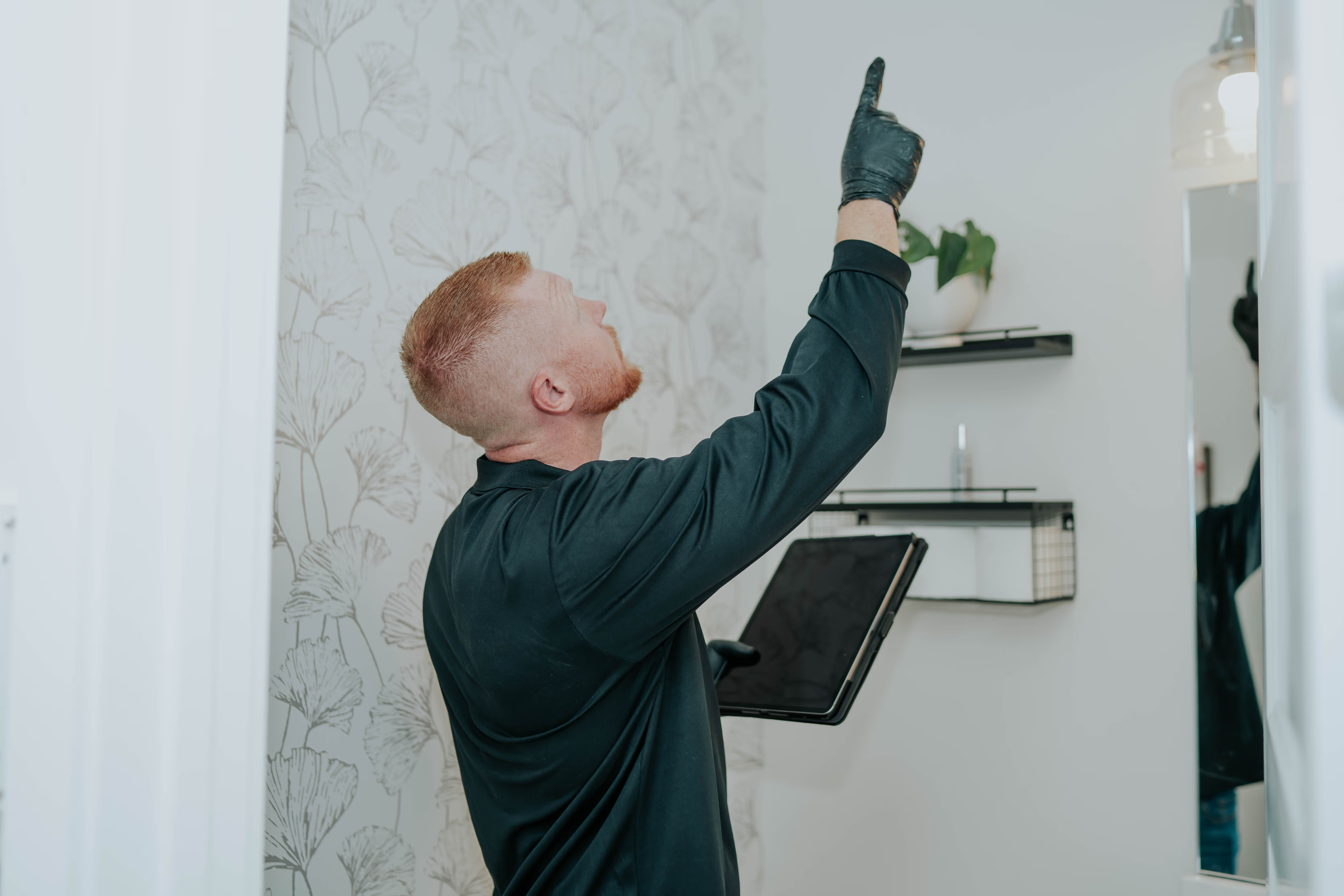
When the snowpack lets go in late February and a Chinook wind pushes the melt across still frozen ground, water reaches the low corner of a South Hill basement within days, and basement mold inspection in Spokane, WA is how you find out what it left behind.
We measure instead of guessing. A moisture meter on the slab, the bottom plates and the foundation wall, a hygrometer for the room, a look behind the drywall or paneling where there is a way in, and samples to an accredited third party lab when the readings call for them. Then a written report you keep.
Part of our Mold Inspection & Testing service in Spokane, WA.
Verified Reviews
Real homes. Real results.
Verbatim Google reviews from people we have worked with around Spokane and North Idaho.
“Terry came and inspected my apartment wall for water damage/moisture in the wall. He did a very good job assessing the damage and used the proper equipment to do so. He was honest and even gave me knowledge about how professionals assess for damage. I would highly recommend My Pure Environment. They are the best and the most honest in the area.”
“Terry and his team were wonderful to work with. They were quick to schedule, answered all my questions, and were very responsive. I would definitely recommend this company!”
Spokane's old basements sit at the frost line
The city's footing rule puts foundations at least 24 inches below grade, which is one reason the older neighborhoods have full basements rather than slabs. In Manito, Browne's Addition and the Perry District that basement was dug in the late 1800s or early 1900s, and the wall has been letting a little ground water through ever since.
Two marks tell the story. Efflorescence, the white mineral crust, shows where water has come through the wall and dried. A tide line, a band of staining at one height, shows how high the water stood in a past melt. We photograph both and meter the wall above and below them.
The melt runs on a calendar
Spokane's snowpack usually starts melting in late February or March, often when a Chinook arrives, and the runoff over frozen ground is the most predictable basement seepage trigger of the year. Local advice is to test the sump pump in February, before the first spring storm. The high water years are remembered: in February 2017 Latah Creek went to flood stage, something it had not done since 1998, and the Spokane River hit near record levels the following month.
That calendar sets the best time to inspect. Right after the melt, the evidence is fresh. In autumn, you get a baseline before the next one.
A finished basement hides the evidence
Newer builds in Liberty Lake and remodels on the South Hill put carpet on the slab and drywall over the foundation, and the first sign of a problem is a smell. A meter reads moisture through drywall without cutting it. Where that is not enough we lift a corner of carpet or pull a length of baseboard, with your say so, and put it back.
The report says whether to treat, and how much
If the numbers are in line with outdoors, the report says so and you are done. If not, basement mold removal is the next step, and in most basements it is done without tearing out walls. When the drywall or carpet is too far gone to keep, we say that upfront rather than on the day. The house is empty during the VaPURE treatment, pets and plants included, and most people are back in it the same evening. If the moisture is coming up from under the floor rather than through the wall, we will suggest a crawl space mold inspection for the part of the house that sits on one.
Why My Pure Environment
What sets us apart.
Samples Read Off Site
Samples are read by an accredited third party lab, and the numbers come to you straight from it.
A Written Report You Keep
Readings by location, photos of the seepage lines, the lab results and what to fix first, in a report you can hand to a buyer or an insurer.
Often No Demolition
Most basement treatments avoid tear out. When materials have to come out, you hear it before we start.
Frequently Asked
Have questions? Start here.
Have a question we haven't answered? Contact us, or call 866-940-1153.
Usually not. It is efflorescence, minerals left behind when water passes through masonry and dries. It is not mold, but it is a map of where the water comes in, and that is where we look for mold.
After, if you suspect a problem now, because the evidence is fresh. Before, in the autumn, if you want a baseline to compare against.
Yes. A smell with no visible growth usually means the growth is behind something: paneling, carpet pad, the back of a bottom plate. The meter finds it without demolition.
Yes, and we check the pump and the pit while we are there. A pit that has overflowed once leaves a line.
Schedule Your Free Consultation
Find out what the melt left behind.
Book a free consultation and we will schedule the inspection around the season, not the other way round.
Back to Mold Inspection & Testing in Spokane
Or call us directly
866-940-1153
Where We Work
Serving Spokane & the Inland Northwest.
Based on Spokane's South Hill, we serve homes and businesses throughout the Inland Northwest, including Spokane Valley, Liberty Lake, Cheney, Mead and Deer Park, WA, plus Coeur d'Alene, Post Falls, Hayden and Sandpoint, ID. See our full service area list.