
“Terry was on time and was very professional. His down to earth personality, and his knowledge of the products was very beneficial.”
Serving Spokane · the Inland Northwest
Crawl Space Mold Inspection in Spokane, WA
Joists, subfloor, vapor barrier, vents and ductwork checked under the house, with readings and photos in a written report. An accredited third party lab reads any samples we take.
Every Sample Lab-Tested
A Written Report You Keep
Safer Chemical Ingredients List
Workmanship guaranteed
On every My Pure Environment treatment
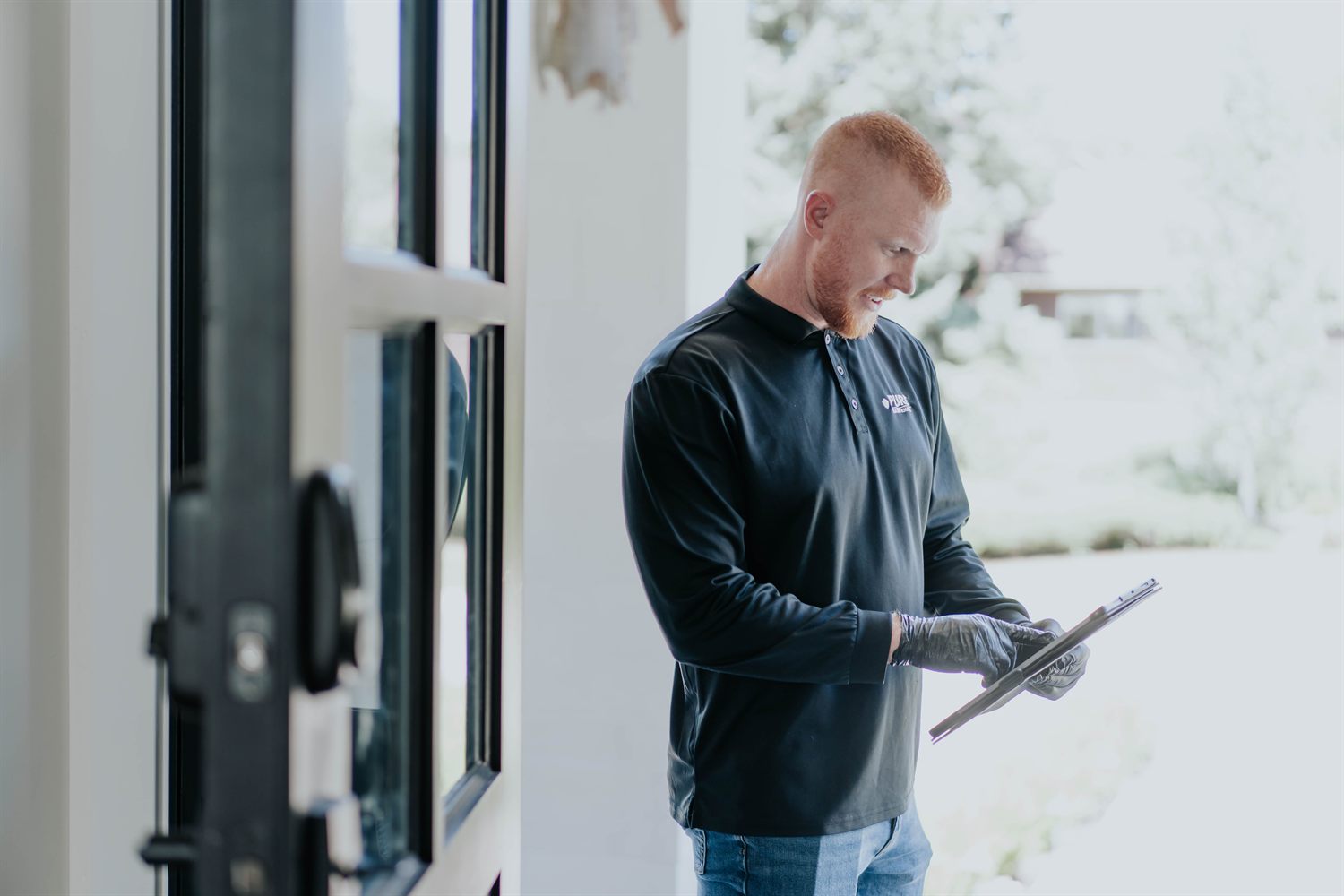
Crawl space mold inspection in Spokane, WA is mostly a story about the 1950s and 60s ranch house, because that is what sits on a vented crawl space across Spokane Valley, North Spokane, Five Mile and Millwood.
We go under the house. A moisture meter on the joists and subfloor, a look at the vapor barrier or the bare dirt where one should be, the vents, the ductwork, the plumbing and any standing water, all photographed and written up. Samples go to an accredited third party lab when the readings say they should.
Part of our Mold Inspection & Testing service in Spokane, WA.
Verified Reviews
In their own words.
A few of the Google reviews our clients have left after we finished the job.
“Very quick response, friendly, and informative. Answered all my questions and provided us with a number of options.”
“Terry came and inspected my apartment wall for water damage/moisture in the wall. He did a very good job assessing the damage and used the proper equipment to do so. He was honest and even gave me knowledge about how professionals assess for damage. I would highly recommend My Pure Environment. They are the best and the most honest in the area.”
Why do Spokane Valley ranches grow mold underneath?
The city's median home was built in 1961, on the tail of the post war expansion that followed Fairchild's opening in 1942. Those single level ranches in Shadle, Fairwood, Indian Trail and Comstock sit on crawl spaces built to the ventilation rules of their day. Washington's Energy Code now asks for a 1 to 300 ratio of net free vent area to floor area and a 6 mil vapor barrier over the ground, and a WSU Energy Program study found crawl spaces built to that standard rarely reached dew point. A 1961 crawl space with a torn barrier and two blocked vents is the other case.
Under Spokane Valley and Otis Orchards the Spokane Valley Rathdrum Prairie aquifer sits close to the surface, so some crawl spaces are dealing with ground water during the melt as well as runoff.
What do we check under the house?
Every reading gets a location so it can be compared with the next inspection.
- Vapor barrier: present, torn, or missing
- Vents: how many, whether they are blocked, and whether someone closed them and forgot
- Joist and subfloor moisture, metered at several points
- Standing water, damp soil and where drainage runs
- Duct joints, duct insulation and where the return pulls from
- Plumbing drips and the dryer vent
Is the crawl space also where the radon is?
Often. Spokane County sits in the EPA's Radon Zone 1, and the county's measured average indoor level, 5.8 pCi/L, is above the EPA action level of 4. Kootenai County across the state line is Zone 1 too. The same crawl space that lets moisture through lets radon through. We do not test for radon, but if you plan to seal or encapsulate the crawl space, get a radon test from a radon tester first so the plan handles both.
Why does the furnace matter?
In a ranch house the ducts run through the crawl space. A leaky return draws crawl space air into the system and hands it to every room. We note duct condition in the report because a moldy crawl space with leaking ducts is an HVAC job as well: HVAC mold removal alongside crawl space mold removal. The VaPURE process reaches the framing and the ducting together, the house is empty during treatment, and most families are back in it the same evening. The sterilant breaks down into acetic acid (white vinegar), oxygen and water shortly after treatment.
What does the report cover?
Readings by location, photos, what we found and what to fix first: drainage, barrier, vents, ducts. It is written for a homeowner and a contractor at the same time, and it is yours to keep for a buyer or an insurer.
Why My Pure Environment
Why My Pure Environment.
Every Sample Lab-Tested
Samples from under the house go to an accredited third party lab, and the report is the lab's, not ours.
A Written Report You Keep
Photos, readings and a fix list a contractor can work from and a buyer can read.
Safer Chemical Ingredients List
The active component of the sterilant is on the EPA's Safer Chemical Ingredients List.
Frequently Asked
What people ask us.
Have a question we haven't answered? Contact us, or call 866-940-1153.
Sometimes. Older ranches have an exterior access door; some have a hatch in a closet floor. Tell us which when you book and we will bring the right gear.
Not on a guess. Washington's code assumes open vents over a ground barrier, and closing them over bare dirt can trap moisture under the house. Our report tells you what your crawl space needs.
It can, through gaps in the subfloor and through leaky ducts. That is why we check the ducts as part of the inspection.
You will see standing water and a torn barrier. You will not see moisture inside the joists or a return leak, and those are what a meter and a smoke pencil find.
Schedule Your Free Consultation
Find out what the house is sitting on.
Book a free consultation and we will get under the house before the melt does.
Back to Mold Inspection & Testing in Spokane
Or call us directly
866-940-1153
Where We Work
Serving Spokane & the Inland Northwest.
We work across Spokane and Spokane County, from the South Hill and Spokane Valley out to Liberty Lake, Cheney and Mead, and over the state line into Coeur d'Alene, Post Falls and Sandpoint, ID. See our full service area list.