
“Terry and his team were wonderful to work with. They were quick to schedule, answered all my questions, and were very responsive. I would definitely recommend this company!”
Serving Spokane · the Inland Northwest
Emergency Mold Treatment in Spokane, WA
After a burst pipe or a roof leak, we schedule fast, find the water, and treat the whole house in one visit while you are out. An accredited lab confirms the result before we close the job.
Most Homes Treated in a Day
Workmanship Guarantee
Often No Demolition
Workmanship guaranteed
On every My Pure Environment treatment
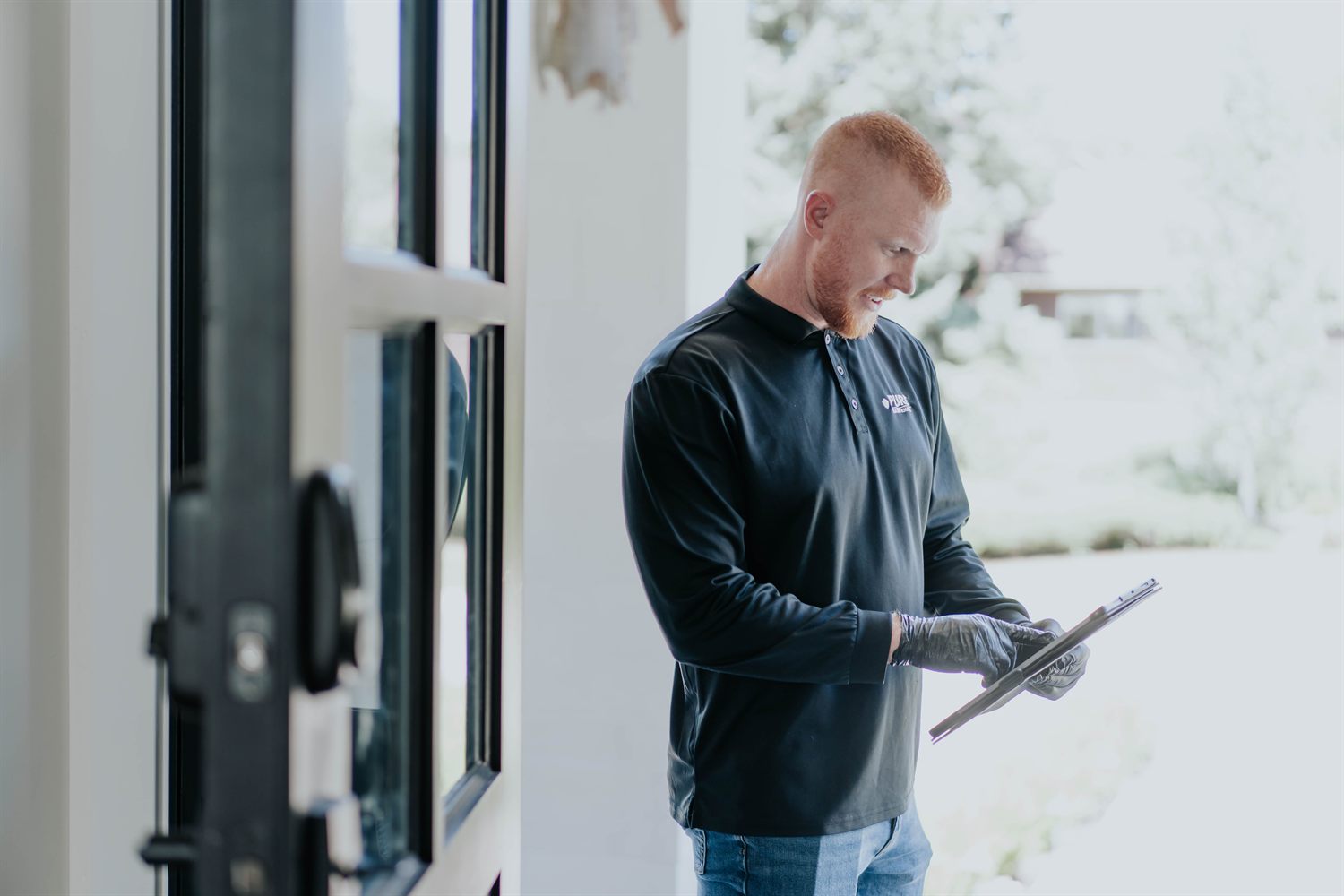
When a pipe freezes and splits inside a north-facing wall during a Spokane cold snap, emergency mold treatment in Spokane, WA is the call that comes after the plumber's. The water is stopped, the wall is wet, and the clock has started.
We do not quote response times, because we would rather tell you what we can do: answer the phone Monday to Friday, 7am to 7pm, get someone out fast, and treat the whole property in a single visit so the problem stops growing. What happens in the first week is what keeps a wet wall from becoming a demolition job.
Verified Reviews
Real homes. Real results.
Verbatim Google reviews from people we have worked with around Spokane and North Idaho.
“Kaleb and his crew were incredible to work with. They provided all of the information on the front end to help make this a wonderful experience. If you're fighting the uphill battle against mold, I strongly recommend getting My Pure Environment involved. Thank you guys again for take such great care of us.”
“Terry was on time and was very professional. His down to earth personality, and his knowledge of the products was very beneficial.”
Act in the first days, not the first month
Mold does not wait for the insurance adjuster. The EPA's guidance is that wet materials dried within 24 to 48 hours usually do not grow mold. Past that window, in a house the furnace is holding warm through a Spokane winter, wet drywall, insulation and framing are exactly what it wants. A leak dealt with in week one is usually a treatment. The same leak found in week four is often drywall coming out, insulation bagged and a bigger bill.
A closed-up winter house speeds it along. The windows stay shut from October to April for the cold, and again in late summer for the smoke, so a wet wall dries slowly and the air around it stays still while the mold keeps growing.
Watch for the cold snap, then watch for the melt
Spokane's two emergencies come months apart. The first is the freeze. December lows average near 22 degrees, and the region rarely dips below 11 degrees, but when it does, pipes in exterior walls, garages and crawl spaces split. The winter storm of 23 to 27 January 2026 brought snow, ice and sub-freezing temperatures across the region, and a storm like that is when hose bibs left connected and water heater lines in unheated corners let go.
The second is the melt. The snowpack usually starts going as February ends, faster when a Chinook blows in, and a winter's worth of it has to go somewhere. Ice dams that built up over the winter finally push water through the roof deck, sump pumps that sat idle since October fail on the first big day, and window wells fill. The standing advice around here every February is to test the sump pump before the first spring storm. We would add: walk the basement with a flashlight the morning after the first warm rain.
Find the water before you treat anything
Treating mold with the leak still running wastes your money, so the first visit is an inspection and a moisture map. We trace how far the water went (wall cavity, floor below, crawl space), take air and surface samples for an accredited third-party lab, and tell you what is wet and what is only stained. If the plumber or roofer has not been yet, we tell you what to get fixed first and work around their schedule.
- Stop the water at the source before anything else
- Photograph the damage for your insurer before it is disturbed
- Do not pull down wet drywall yourself; it spreads spores through the house
- Keep people and pets out of the wet rooms until we have looked
Treat the whole house in one visit
Once the source is fixed we treat the property with the VaPURE process: a sterilant vapor first, then an antimicrobial protectant that helps surfaces resist regrowth with the moisture cause fixed. The vapor gets into wall cavities, up into attic framing, under the floor and through the ducting, so the spores that spread while the wall was wet are treated along with the patch. Most jobs avoid demolition. When drywall or insulation is past saving, we say so upfront and remove only that.
The home is vacant during treatment. People, pets and plants go out, most homes take four to six hours, and you are back the same evening. Afterward the same accredited lab tests again, and you keep the written before-and-after report.
Schedule fast, and plan on the same evening
Call 866-940-1153 between 7am and 7pm, Monday to Friday. We schedule fast, and the first visit is a free consultation with no obligation. If you find the burst pipe at 6pm on a Friday, stop the water, get the plumber in, photograph the room, and we pick the phone up again at 7am on Monday. That is honest scheduling, and it is fast enough to keep a treatment job from turning into a restoration job.
Why My Pure Environment
What sets us apart.
Most Homes Treated in a Day
Typical treatment runs four to six hours while the home is vacant. You are out in the morning and back the same evening.
Workmanship Guarantee
Every treatment carries our workmanship guarantee, backed by the lab report you keep. Ask us about re-treatment options.
Often No Demolition
Acting early is what keeps the drywall on the wall. Most jobs avoid tear-out, and what has to come out we name before we start.
Frequently Asked
Have questions? Start here.
Have a question we haven't answered? Contact us, or call 866-940-1153.
We schedule fast, but we do not promise a time. Our hours are Monday to Friday, 7am to 7pm, and a call early in the day gets on the schedule sooner. Stop the water and get the leak fixed first; that is the part that cannot wait.
The EPA says materials dried within 24 to 48 hours usually will not grow mold. In a warm Spokane house in January, a wall that stays wet longer than that is at risk, and the growth is often inside the cavity where you cannot see it.
Stop the source and move anything soaked that you can lift, like rugs and boxes. Do not cut into drywall or tear out insulation; that spreads spores through the house. If a water mitigation company is drying the structure, we work alongside them.
A pipe that burst while the house sat empty over a cold week is the case where the four-week problem shows up on day one. Call as soon as you find it, keep the wet rooms closed off, and expect that some drywall will come out. We will tell you how much after the moisture map.
How long the water sat, how far it traveled, what got wet (drywall and insulation cost more to deal with than plaster and concrete), whether the crawl space or attic is involved, and how many rooms need treatment. We quote after the first visit, and the visit is free.
Schedule Your Free Consultation
Call while it is still a wet wall and not a rebuild.
Book a free consultation, Monday to Friday 7am to 7pm, and we will schedule fast and tell you plainly what you are dealing with.
Head back to My Pure Environment in Spokane, WA or browse all our Spokane services.
Or call us directly
866-940-1153
Where We Work
Serving Spokane & the Inland Northwest.
Based on Spokane's South Hill, we serve homes and businesses throughout the Inland Northwest, including Spokane Valley, Liberty Lake, Cheney, Mead and Deer Park, WA, plus Coeur d'Alene, Post Falls, Hayden and Sandpoint, ID. See our full service area list.